On June 14, 2025, the US army celebrated its 250th anniversary with a parade championed by President Donald Trump in Washington, DC.

China showcased its latest military hardware, including hypersonic and ballistic missiles, during a parade commemorating the 80th anniversary of its victory against Japanese aggression in World War II. President Xi Jinping called for world peace and national rejuvenation.

A summary of Saturday's action in the FIFA World Cup 2026 UEFA Qualifiers.

Defence Minister Rajnath Singh stated that Pakistan's entire territory is within the range of the BrahMos missile. He highlighted the missile's importance to India's armed forces during a flag-off ceremony in Lucknow.
Sections in the US State Department and Pentagon have always felt more comfortable dealing with all powerful Pakistani generals instead of elected civilians, points out Rana Banerji, who headed the Pakistan desk at RA&W.
Security agencies are concerned about the increasing use of drones by terror groups in Jammu and Kashmir for surveillance and logistics, replacing human networks.

Left to its machinations, the BJP would have loved to cut Nitish down to size, but it can't afford to do so as the JD-U is in alliance with the BJP at the Centre, and cannot form a government on its own in Bihar. For now, both need each other: Nitish for legitimacy, the BJP for numbers, points out Ramesh Menon.

The air raids struck areas including the outskirts of Brital and Nasiriyah towns in the Bekaa Valley, Tallet al-Sunduq, Jarmak in Jezzine, and the Mahmoudiya and Khardali regions.

'With tears in his eyes, he told me in Gujarati, "What have they done to this country? It has so much potential." That feeling for the country -- it was striking.'
'Saudi-Pak defence pact is to anchor the defence and security of Saudi Arabia and not Pakistan, per se, with Islamabad being the junior partner.'

'You cannot 'clear' your way to peace.' 'You need intelligence, calibrated force, impartial law enforcement, political neutrality, humanitarian returns and a sustained reconciliation plan.'
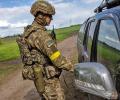
A Gujarat resident, Majoti Sahil Mohammed Hussein, enlisted in the Russian military to avoid a prison sentence in a drug-related case and subsequently surrendered to Ukrainian forces. His family is appealing to the Indian government for his return.

Spain secured their place at the 2026 World Cup after a nervy 2-2 draw with Turkey in Seville on Tuesday.

The point to note for India is that we must not panic. The United States may be our largest export destination, but high tariffs will not exactly mean gloom and doom. Sure, we can throw some morsels as we continue negotiating, but we must be firm that some red lines cannot be crossed, no matter what, asserts Shreekant Sambrani.

'The killing of players and civilians is not honour -- it is the deepest disgrace. Long live Afghanistan.' Afghan Cricketers Unite Behind ACB After Fatal Airstrike.

A combative Hafiz Mohammad Saeed, Jamaat-ud-Dawah chief, on Wednesday dared the United States to carry out a military raid against him like the one that killed Osama bin Laden, saying he was not hiding and would inform the Americans himself about his whereabouts.

A Pakistan that is more secure in its relations with the US is also one that might well wish to indulge in another cross-border misadventure.

'Pakistan has found itself in a favourable position after Operation Sindoor by appreciating the mediation as claimed by Trump and recommending him for the Nobel Peace Prize.'

What makes the Gen Z Mada movement in Madagascar significant is not only their use of digital tools but their ability to unify a disillusioned population around a shared vision of justice, transparency, and reform.

'The background for the Saudi-Pakistan agreement is the fact that the regional security order has collapsed due to the Israeli attack on Doha.' 'The Americans have largely abandoned their security guarantee for West Asia and the region has no choice but to look at alternatives.'
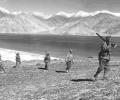
As India and China continue to face off across the Himalayas six decades later, the echoes of that earlier conflict remain unmistakable. The core of China's sensitivity lies not in maps or mountain passes, but in its perception of sovereignty over Tibet, points out Dr Kumar.
The Iraqi Prime Minister said that personnel of the country's national intelligence service, working with coalition forces commanded by the United States, had killed the head of Islamic State in Iraq and Syria.
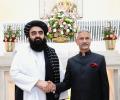
Developing relations with the Taliban is needed, but plunging headlong into Afghanistan without due thought will be akin to the rooster entering a KFC outlet, warns Lieutenant General Prakash Katoch (Retd).
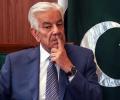
The entry of other Arab countries in the mutual defence deal between Pakistan and Saudi Arabia is not ruled out, Defence Minister Khawaja Asif has said, adding that 'doors are not closed' for such developments.

India and Pakistan agreed on May 10 for a cessation of firing and military activity as a result of 'direct contact' between the director generals of military operations (DGMOs) of both nations, which was 'initiated by the Pakistani side', the Centre informed Parliament on Friday.

Security forces in Manipur have launched a major crackdown on the banned People's Liberation Army (PLA) following an ambush on an Assam Rifles convoy. Fifteen cadres have been arrested, including suspects directly involved in the attack. Investigations are underway to determine if the PLA has political patronage and if weapons looted during ethnic clashes are being used against security forces.

Youth-led Gen Z group in Nepal demands Parliament dissolution and Constitution amendment amid anti-government protests and a rising death toll. They emphasize dialogue and warn against political manipulation.

The stock and bond markets told Trump firmly that any idea of isolating China would lead to harming the US economy and this forced Trump to backtrack, points out Aakar Patel.

'If Washington has to balance Chinese power, she will have to turn to the third biggest power in the world which is India.' 'The United States and India will have to work together in order to keep Chinese ambitions in check.'

In his address, Sharif praised US President Donald Trump, saying his "efforts for peace helped avert a ... war in South Asia".

Heavy rains in Maharashtra's Nanded district have left five people missing and several others stranded. Rescue operations are underway with NDRF, military, and police teams coordinating efforts.

The Defence Acquisition Council (DAC) has approved military projects worth approximately Rs 67,000 crore, including drones, radars, and missile systems, aimed at enhancing India's military capabilities.

India Test captain Shubman Gill expressed anguish over the large-scale devastation caused by floods in his home state of Punjab due to incessant rainfall.

The CBI has taken over the investigation into the alleged assault of a colonel by Punjab Police personnel, registering two separate FIRs. The incident allegedly occurred at a roadside dhaba in Patiala.
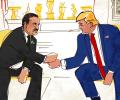
'Trump has personally weighed in to overcome doubts and reservations about Pakistan among his top advisors.'
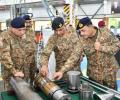
'If you fire two missiles at Jamnagar or ten missiles there, what do you think India will do?' 'India will fire 500 missiles on Tarbela and Mangla, destroy the Sukkur Barrage, destroy Karachi port.' 'When you start issuing threats, it should be with some sense and sensibility.' 'You shouldn't just shoot your mouth off just because you have appointed yourself field marshal.'
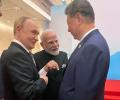
'One Chinese interlocutor said India should realise that "China can do without India, but India could not do without China", pointing to its inability to do without Chinese intermediates and components,' former foreign secretary Shyam Saran discovers on a visit to China.

There has never been a moment in India's history when it has been so adrift in the world, so confused about what it stands for and against and so humiliated, asserts Aakar Patel.
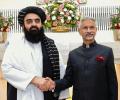
'Pakistan is uncomfortable with the Indian presence in Afghanistan. They want the Taliban to ensure that there is no Indian presence in Afghanistan.'
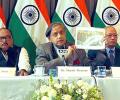
Tharoor also showed the picture of Pakistani Army officials attending the funerals of terrorists after India's strike on their terror bases.
 © 2026 Rediff.com - Advertise with us - Disclaimer - Privacy Policy - Sitemap - Feedback - About us - Terms of use - Grievances